 Save
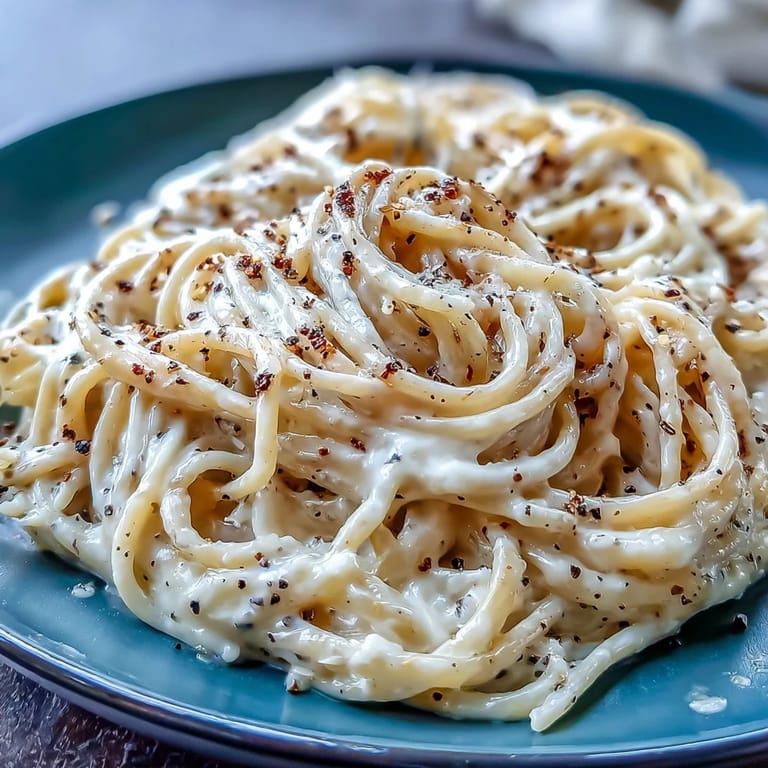
Save Cacio e Pepe is a legendary Roman pasta dish that celebrates the beauty of simplicity. By combining sharp Pecorino Romano cheese with the bold heat of freshly cracked black pepper, this recipe delivers a creamy, flavorful experience using only a handful of high-quality ingredients. It is a testament to how traditional Italian cooking can create a sophisticated main dish in under 30 minutes.
Save The key to this dish is the emulsion created between the finely grated cheese and the starchy pasta cooking water. When done correctly, it forms a velvety sauce that coats every strand of spaghetti without the need for heavy cream.
Ingredients
Tired of Takeout? 🥡
Get 10 meals you can make faster than delivery arrives. Seriously.
One email. No spam. Unsubscribe anytime.
- 400 g (14 oz) spaghetti or tonnarelli
- 120 g (4.2 oz) Pecorino Romano cheese, finely grated
- 2 tsp whole black peppercorns, freshly cracked
- 1 tsp kosher salt (for pasta water)
- 1 tbsp unsalted butter (optional, for extra creaminess)
Instructions
- Step 1
- Bring a large pot of water to a boil. Add salt, then cook the spaghetti until just al dente (about 1 minute less than package instructions). Reserve 1½ cups (350 ml) of pasta cooking water before draining.
- Step 2
- While the pasta cooks, toast the freshly cracked black pepper in a large, dry skillet over medium heat for about 1 minute, until fragrant.
- Step 3
- Add 1 cup (240 ml) of reserved hot pasta water to the skillet with the pepper. Reduce heat to low.
- Step 4
- Add the drained pasta to the skillet and toss to coat, allowing the pasta to absorb some peppery water.
- Step 5
- Remove the skillet from the heat. Gradually sprinkle in the Pecorino Romano, tossing and stirring vigorously to create a creamy sauce. Add more reserved pasta water, a splash at a time, if the sauce is too thick.
- Step 6
- If desired, add butter and toss until melted and emulsified.
- Step 7
- Serve immediately, topped with extra Pecorino Romano and more cracked black pepper.
Zusatztipps für die Zubereitung
Für beste Ergebnisse sollten Sie den Pecorino Romano immer frisch reiben und die Pfefferkörner erst kurz vor dem Kochen mahlen. Vermeiden Sie bereits geriebenen Käse aus der Packung, da dieser Trennmittel enthalten kann, die ein gleichmäßiges Schmelzen verhindern und die Sauce klumpig machen könnten.
Varianten und Anpassungen
Obwohl Spaghetti die gängigste Wahl sind, ist Tonnarelli die traditionelle Pasta für dieses Gericht. Wer es besonders cremig mag, kann einen Esslöffel ungesalzene Butter hinzufügen – auch wenn Traditionalisten dies weglassen würden. Achten Sie bei der Wahl des Käses auf vegetarisches Lab, falls eine strikt vegetarische Ernährung gewünscht ist.
Serviervorschläge
Servieren Sie die Cacio e Pepe sofort, solange sie noch heiß und cremig ist. Garnieren Sie jede Portion mit einer extra Prise Pecorino Romano und frisch gemahlenem Pfeffer. Dazu passt hervorragend ein spritziger italienischer Weißwein wie Frascati.
 Save
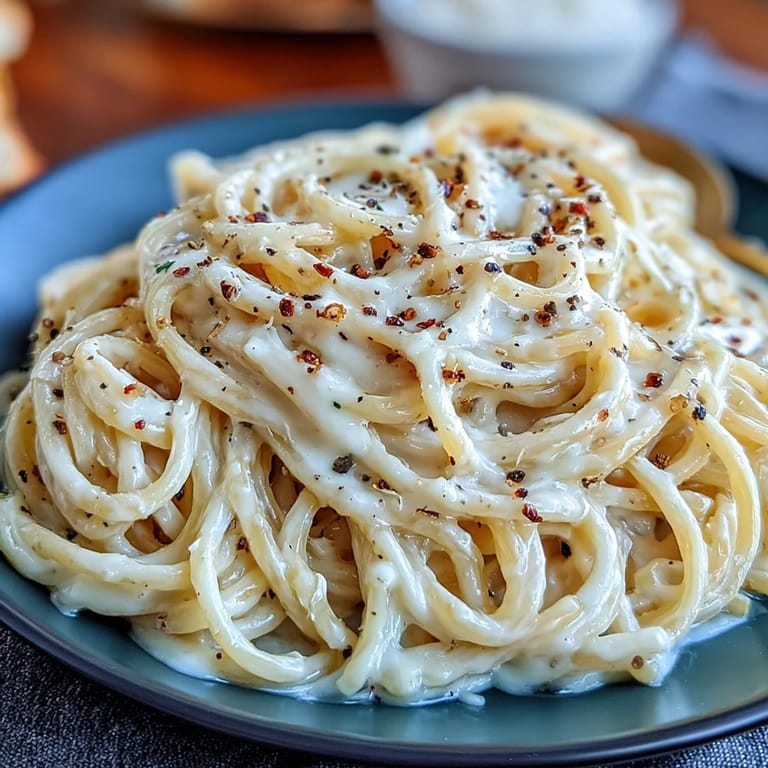
Save Mastering the technique of Cacio e Pepe is a rewarding skill for any home cook. With just a little practice in emulsifying the cheese and water, you can enjoy a restaurant-quality Roman meal in the comfort of your own kitchen.
Recipe Questions
- → What type of pasta works best for Cacio e Pepe?
Tonnarelli is the traditional choice, but spaghetti works excellently. Long pasta shapes help the creamy sauce coat each strand evenly for optimal flavor in every bite.
- → Why is my sauce clumpy instead of creamy?
Remove the pan from heat before adding cheese, and add it gradually while stirring vigorously. The pasta water should be hot but not boiling when mixed with cheese to prevent clumping.
- → Can I substitute Parmesan for Pecorino Romano?
While Parmesan can be used, Pecorino Romano's sharp, tangy flavor is essential to authentic Cacio e Pepe. Pecorino provides the distinctive bold taste that defines this Roman classic.
- → How much pasta water should I reserve?
Reserve at least 1½ cups of starchy pasta water. The starch helps create the creamy emulsion, and you can adjust the sauce consistency by adding more water as needed.
- → Should I toast the black pepper?
Yes, toasting whole cracked peppercorns in a dry skillet for about a minute intensifies their aroma and flavor, adding depth to the finished dish.
- → Is butter traditional in Cacio e Pepe?
Traditional versions use only cheese, pepper, and pasta water. Butter adds extra richness and creaminess but purists prefer the three-ingredient approach.